DTH vs Top Hammer Drilling — Which Method Is Right for Your Project?
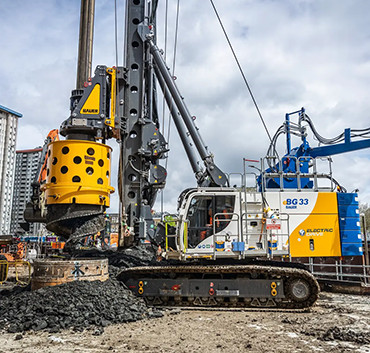
If you are selecting equipment for a new drilling project — whether it is a water well, geotechnical investigation, or mining operation — you will quickly face this choice: Down-the-Hole (DTH) or Top Hammer?
Both methods drill rock. Both are widely used across Africa, the Middle East, and globally. But they work very differently, have different cost profiles, and are suited to different applications.
This guide breaks down everything you need to know to make the right choice.
How DTH Drilling Works
In Down-the-Hole (DTH) drilling, the hammer sits at the bottom of the drill string, directly behind the bit. High-pressure air powers the hammer, which impacts the bit directly against the rock face. The drill string transmits rotation from the surface drill rig, while the hammer delivers percussive energy at the bottom.
Key characteristics of DTH: <ul> <li>Percussive energy is delivered at the rock face — minimal energy loss through the drill string</li> <li>Operates at relatively low rotation speed (20–60 RPM)</li> <li>Compressed air flushes cuttings up the annulus</li> <li>Consistent hammer energy at any depth</li> <li>Produces straight, accurate boreholes</li> </ul>
How Top Hammer Drilling Works
In Top Hammer drilling, the hammer sits at the top of the drill string — at the surface. Percussive energy travels down through the drill rods to the bit at the bottom.
Key characteristics of Top Hammer: <ul> <li>Simple setup, fewer components</li> <li>Fast penetration in shallow, hard rock</li> <li>Higher rotation speeds (100–300 RPM)</li> <li>Energy is attenuated with depth — less effective beyond 30–50 metres</li> <li>Less accurate borehole at depth compared to DTH</li> </ul>
Head-to-Head Comparison
| Factor | DTH | Top Hammer |
|---|---|---|
| Best depth range | 50m–1,200m | 0m–50m (optimal) |
| Penetration rate in hard rock | High | Very high (shallow) |
| Penetration rate in soft rock | Moderate | Moderate to high |
| Borehole straightness | Excellent | Good (shallow only) |
| Air compressor requirement | High (150–900 CFM) | Lower |
| Drill string wear | Lower | Higher |
| Setup cost | Higher | Lower |
| Running cost per metre | Lower (deep drilling) | Lower (shallow drilling) |
| Typical application | Water wells, blast holes, geotech | Quarrying, shallow blast holes |
When to Choose DTH
Choose DTH when:
- Drilling water wells deeper than 50 metres. The vast majority of productive aquifers in Africa and the Middle East sit between 60m and 400m deep. DTH is the standard method for this depth range.
- Borehole straightness matters. Water well casings require a straight hole. DTH's bottom-mounted hammer delivers consistent, straight penetration regardless of depth.
- Formation is hard basement rock. Nigeria's North-Central basement, Kenya's Rift Valley trachyte, and similar formations are drilled most efficiently with DTH. Top Hammer loses too much energy through the rods at these depths.
- You need consistent production. DTH bit life is more predictable than Top Hammer in abrasive formations, making project scheduling more reliable.
- Large diameter holes. DTH systems scale efficiently to 8", 10", 12" and beyond. Top Hammer is harder to scale beyond 6".
When to Choose Top Hammer
Choose Top Hammer when:
- Drilling is shallow (under 30–40 metres). For surface blast holes in quarries and open-cast mines, Top Hammer is faster and simpler.
- Ground conditions are consistently hard rock near surface. Where the overburden is thin and the rock is uniform, Top Hammer is highly cost-effective.
- You need maximum penetration rate in a hard quarry face. Production drilling in granite quarries is a classic Top Hammer application.
- Equipment simplicity is a priority. Top Hammer rigs have fewer components, are easier to maintain in remote areas, and require less air pressure.
Cost Comparison — The Real Numbers
For a 100-metre water well in hard rock (e.g., Nigerian basement):
| Cost Item | DTH | Top Hammer |
|---|---|---|
| Bit cost per borehole | Medium (1–2 bits) | Higher (3–5 bits; more wear) |
| Drilling time | 8–14 hours | 16–30 hours (energy loss = slower) |
| Compressor fuel | Higher | Lower |
| Casing salvage rate | Higher (straighter hole) | Lower (deviation risk) |
| Total cost per metre | Lower | Higher |
For shallow quarry blast holes (15m):
| Cost Item | DTH | Top Hammer |
|---|---|---|
| Setup cost | Higher | Lower |
| Penetration rate | Slower | Faster |
| Total cost per metre | Higher | Lower |
The Right Bit for Your DTH System
Once you have chosen DTH, the next decision is bit configuration. The three main options:
Spherical (Round) Buttons — Best for hard, abrasive formations. Wear evenly. Used for granite, gneiss, quartzite.
Ballistic Buttons — Best for medium-hard formations. Aggressive penetration. Used for limestone, sandstone.
Semi-Ballistic Buttons — Versatile. Good compromise between penetration rate and wear life. Good all-rounder for mixed formations.
Not sure which applies to your site? Contact our technical team with your formation description and we will recommend the right configuration.
Summary
- DTH is the right choice for water wells, deep blast holes, geotechnical drilling, and any application where depth, accuracy, and consistent production matter.
- Top Hammer is the right choice for shallow quarry drilling, surface blast holes under 40 metres, and operations where simplicity and speed in hard surface rock are paramount.
- Most serious drilling operations in Africa and the Middle East use DTH as their primary method.
At Global Edge, we supply both DTH and Top Hammer systems. We stock DTH hammers from 4" to 12", button bits in all sizes and configurations, and Top Hammer rods and bits for quarry applications — all available for fast delivery across Africa.
→ Browse Our Drilling Products → Request a Quote → Drilling Equipment for Nigeria → Drilling Equipment for Kenya
Zero rig downtime starts with parts already on the shelf.
Not sure of your exact hammer or bit spec? Send a photo on WhatsApp — we verify shank, thread and diameter against Abu Dhabi stock and send part numbers + landed price to your port within 4 working hours. Free, no obligation. Backed by a 90-day replacement guarantee and 48–72h air dispatch.