Water Well Drilling in West Africa — Equipment, Geology, and What You Need to Know
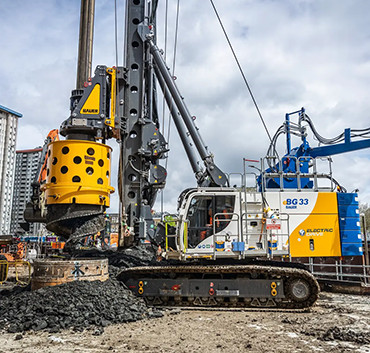
West Africa is one of the most active borehole drilling markets in the world. Nigeria alone drills an estimated 30,000–50,000 new boreholes per year. Ghana, Côte d'Ivoire, Senegal, Burkina Faso, and Mali all have significant water access programmes driving drilling demand.
If you are supplying equipment to or drilling in West Africa, this guide gives you what you need to know: regional geology, equipment requirements, and how to source the right tools reliably.
Why West Africa Needs So Many Boreholes
Access to safe water remains a major challenge across the region:
- Nigeria: Over 60 million people lack access to basic water supply (WHO/UNICEF 2023 data)
- Ghana: Rural water access gaps particularly in Northern and Upper regions
- Côte d'Ivoire: Significant rural coverage deficits
- Sahel countries: Groundwater is often the only viable water source
Drivers of drilling demand: <ul> <li>National government water sector programmes (WASH initiatives)</li> <li>Donor-funded NGO projects (UNICEF, World Bank, USAID, AfDB)</li> <li>Private estate and residential development</li> <li>Agro-industrial irrigation (Nigeria, Ghana)</li> <li>Mining sector (gold, manganese, bauxite) — water supply for operations</li> </ul>
West African Geology — What Your DTH Bits Will Face
Understanding the geology is essential for equipment selection. West Africa has three dominant geological settings relevant to drilling:
1. Crystalline Basement Complex
Where: Covers most of Nigeria (North-Central, North-West, South-West), Ghana (Ashanti, Brong-Ahafo, Upper regions), Burkina Faso, and much of the Sahel.
Rock types: Granite, gneiss, schist, quartzite, amphibolite.
Drilling characteristics: <ul> <li>Hard to very hard (UCS 100–250 MPa in granite)</li> <li>Highly abrasive — kills cheap carbide buttons quickly</li> <li>Fractured zones hold the best aquifers (secondary porosity)</li> <li>Target depth: 60–150m to reach productive fractures</li> <li>Most productive intervals: 30–120m in fresh basement</li> </ul>
Equipment required: <ul> <li>Premium-grade DTH hammer (mid-to-high air pressure: 10–20 bar)</li> <li>Spherical or semi-ballistic buttons, hard tungsten carbide grade</li> <li>High-quality air compressor: minimum 300 CFM; 500+ CFM preferred</li> <li>6"–8" bits depending on casing design</li> </ul>
2. Sedimentary Basins
Where: Niger Delta (Nigeria), Volta Basin (Ghana), Senegal Basin (Senegal), Iullemmeden Basin (Niger, North Nigeria).
Rock types: Sandstone, shale, mudstone, limestone, alluvial sediments.
Drilling characteristics: <ul> <li>Soft to medium hardness (UCS 10–80 MPa)</li> <li>Unconsolidated formations near surface — borehole stability is the challenge</li> <li>Aquifers are porous and high-yielding (when found)</li> <li>UPVC casing critical to prevent collapse</li> <li>Target depth: often shallower (30–80m) in productive formations</li> </ul>
Equipment required: <ul> <li>DTH in harder consolidated formations; rotary mud drilling for soft/unconsolidated</li> <li>Flat-face or ballistic bits for softer rock</li> <li>Heavy-duty UPVC casings with screen sections</li> <li>Bentonite/polymer for borehole stability</li> </ul>
3. Coastal Alluvials and Delta Formations
Where: Lagos, Port Harcourt, Accra coastal zones, Abidjan.
Drilling characteristics: <ul> <li>Unconsolidated sand, gravel, clay</li> <li>Shallow aquifers (often 15–40m)</li> <li>High risk of contamination from surface</li> <li>Cable tool or rotary mud preferred over DTH</li> <li>Significant casing length required</li> </ul>
Equipment required: <ul> <li>Steel or heavy UPVC casing from surface</li> <li>Gravel pack + bentonite seal essential</li> <li>Rotary mud pump rather than DTH air</li> </ul>
Recommended Equipment by Application
Standard Community Borehole (West Africa — Basement)
- Bit: 6.5" or 7" spherical button bit, hard grade
- Hammer: 5" or 6" DTH hammer (10–20 bar operating pressure)
- Casing: 5" or 6" UPVC with screen section at aquifer zone
- Compressor: 300–500 CFM
- Pump: 5" submersible, 2.2–4kW
Residential / Single Estate Borehole
- Bit: 6" ballistic or semi-ballistic
- Hammer: 5" DTH
- Casing: 4" UPVC
- Compressor: 185–300 CFM
- Pump: 4" submersible, 0.75–2.2kW
Agro-Industrial / Irrigation Well
- Bit: 8" to 10" spherical
- Hammer: 8" DTH
- Casing: 8" UPVC or steel
- Compressor: 600–900 CFM
- Pump: 8" submersible or vertical turbine, 7.5–22kW
Logistics: Getting Equipment Into West Africa
Nigeria
- Air freight: Lagos (MMIA) or Abuja (NAIA) — 1–2 days from UAE
- Sea freight: Apapa Port or Tin Can Island, Lagos — 10–14 days from UAE
- Clearing: SON conformity assessment applies to some categories; check before shipping
- Inland: Good road links from Lagos to Abuja, Kano, Port Harcourt via freight forwarder
Ghana
- Air freight: Accra (Kotoka) — 1–2 days from UAE
- Sea freight: Tema Port — 10–12 days from UAE
- Clearing: Ghana Standards Authority (GSA) inspection may apply
Côte d'Ivoire
- Sea freight: Abidjan (San Pedro or main port) — 10–14 days from UAE
- Language: French documentation required for customs — confirm with your supplier
Senegal / Francophone West Africa
- Sea freight: Dakar — 12–15 days from UAE
- French documentation required for all customs clearance
- Increasingly important market for donor-funded WASH programmes
Why Source DTH Equipment from UAE for West Africa?
Many West African contractors default to Chinese suppliers because of price. But the total cost of ownership often tells a different story:
UAE advantages for West Africa: <ul> <li>Shorter shipping lanes: UAE to Lagos by sea is 10–14 days; China is 30–40 days</li> <li>Air freight from Dubai to Lagos is 1–2 days; from China is 3–5 days</li> <li>UAE suppliers often stock internationally-branded products or quality-equivalent alternatives</li> <li>Technical support in English; documentation for donor-funded procurement available</li> <li>Established freight forwarder networks in Apapa, Tema, Abidjan</li> </ul>
The quality argument: A genuine-grade DTH hammer with quality tungsten carbide buttons will drill 30–50% more metres before replacement than a budget equivalent. On a 150m basement borehole, the difference between 2 bits and 3 bits changes your cost per metre significantly.
Summary
West Africa is a growing, dynamic, and high-potential market for drilling equipment. Understanding the geology and sourcing the right tool for the formation will make your projects faster, more profitable, and more competitive.
Global Edge supplies the full range of water well drilling equipment for West African conditions — from individual bits to complete borehole packages — with fast shipping from Abu Dhabi and free technical support.
→ DTH Equipment for Nigeria → Browse Water Well Drilling Products → Request a Quote → All Drilling Products
Zero rig downtime starts with parts already on the shelf.
Not sure of your exact hammer or bit spec? Send a photo on WhatsApp — we verify shank, thread and diameter against Abu Dhabi stock and send part numbers + landed price to your port within 4 working hours. Free, no obligation. Backed by a 90-day replacement guarantee and 48–72h air dispatch.